Collagen peptides and skin barrier support Collagen peptides deserve mention in any discussion of psoriasis management, though their role is supportive rather than directly therapeutic
BPC-157 Safety, Off-Label Status, and Considerations BPC-157 therapy under proper medical supervision has a well-characterized safety profile, but real considerations deserve direct discussion before any Newport Beach patient begins a protocol

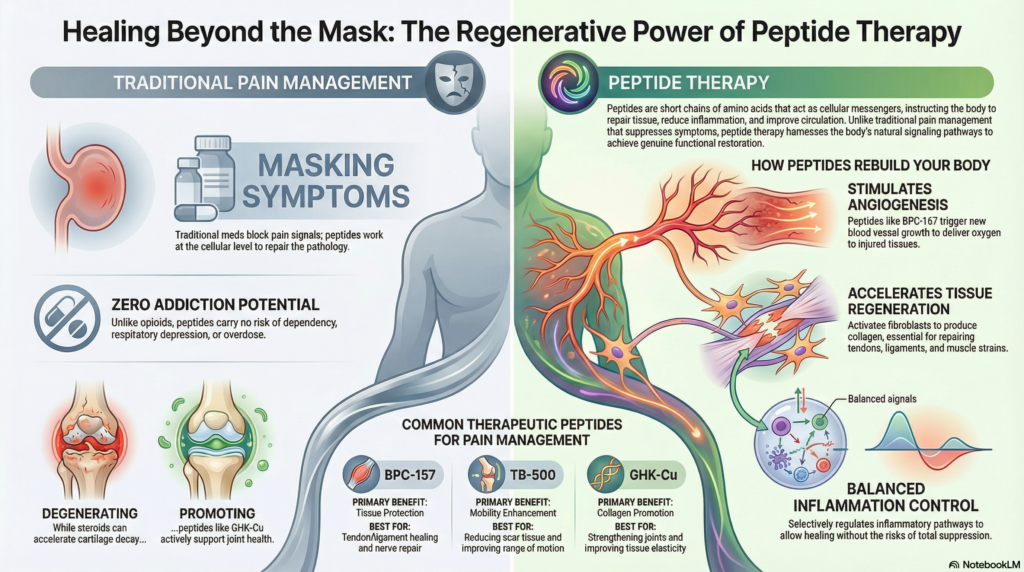
The Promising Findings GHK-Cu has the most robust human evidence, particularly for topical skincare applications BPC-157 shows impressive results in animal studies for wound healing, collagen production, and tissue repair Peptides generally have favorable safety profiles in the studies that exist The mechanisms make biological sense: peptides do play real roles in healing The Limitations Most studies on BPC-157 and TB-500 are animal-based, not human There are no standardized dosing protocols for most injectable peptides Long-term safety data in humans is limited Many peptides are not FDA-approved for cosmetic or surgical recovery purposes Quality control varies widely between compounding pharmacies Important: Many injectable peptides are classified as research compounds and are not approved for human use outside of clinical trials

Research areas under investigation include: Cellular organization and structural maintenance through coordinated actin dynamics Metabolic activity regulation within connective-tissue environments Wound-related biochemical signaling pathways Copper-dependent enzymatic cascade activation Redox balance modulation Additionally, researchers examine the peptide blend for its potential involvement in nitric oxide signaling, fibroblast activity, angiogenic pathway engagement, and immune cell regulation