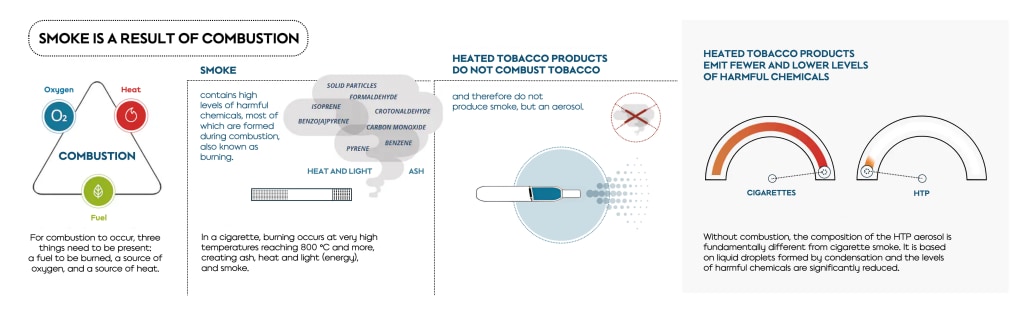
Public Health England, the equivalent of the FDA in the U.K., stated in 2015 that while vaping may not be 100% safe, most of the chemicals causing smoking-related disease are absent and the chemicals that are present pose limited danger. This statement did not consider the fact that health effects of inhaling flavoring chemicals contained in popular e-cigarettes are completely unknown, or that heating liquids in these devices causes thermal decomposition of those e-cigarette chemicals that pose limited danger into known toxicants

Ronald Bayer, a Columbia University professor, told CBS News in 2013 that "the evidence of a risk to people in open-air settings is flimsy." In a 2013 study published in Health Affairs , Bayer and Kathleen Bachynski, now a public health professor at Muhlenberg College, found that the evidence for outdoor smoking bans was "far from definitive and in some cases weak." The impetus for these bans, meanwhile, is "the imperative to denormalize smoking." The paper also concludes that, while denormalizing smoking may prove effective in the short term, "it is hazardous for public health policy makers, for whom public trust is essential." If San Francisco lawmakers are concerned with improving public health outcomes, the evidence-based solution would not be draconian bans, but harm reduction
People also learn tips to help prevent weight gain and identify the best techniques for dealing with a smoking addiction
We hypothesize that reduced CO from decreased exposure to cigarette smoke may account for some of the overall increase in ANA